


After more than a year of designing, building, testing and delivering one of the most ambitious magic projects I’ve ever undertaken, I can finally talk about it.
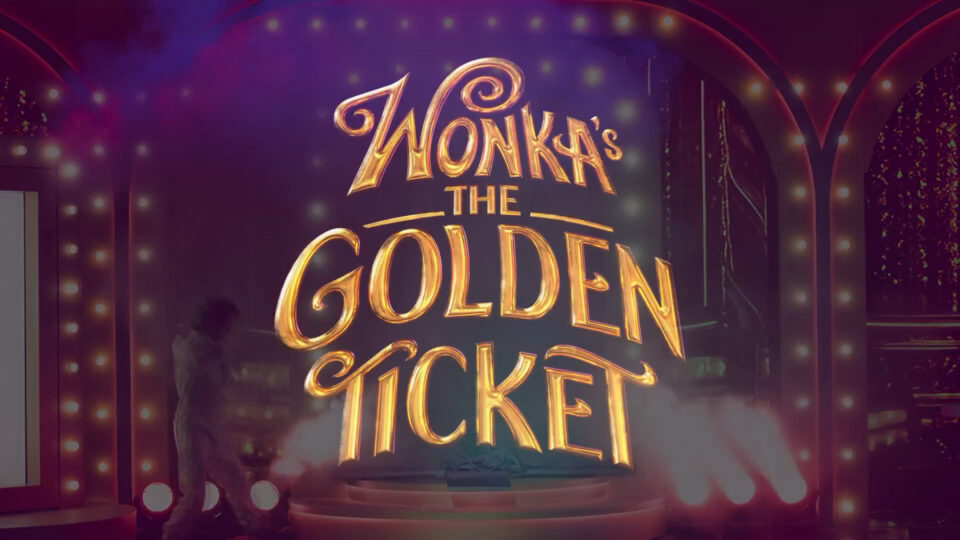
On September 23, Wonka’s The Golden Ticket launches worldwide on Netflix, a spectacular new reality competition set inside the extraordinary world of Willy Wonka.
I had the great privilege of being responsible for designing, creating, directing and delivering the magic, illusions and special effects throughout the series.
For a magician and illusion designer, there are few fictional worlds more exciting or more daunting, to step into than Wonka’s Chocolate Factory. Magic is embedded in its DNA. The challenge for us was never simply to reproduce what audiences already knew. It was to ask:
What might Wonka’s magic look like if his factory really existed today?
And then we had to make it actually work.
Reimagining Wonkavision
One of the greatest opportunities was reinventing one of the most iconic sequences from the 1971 Willy Wonka & the Chocolate Factory: Wonkavision.
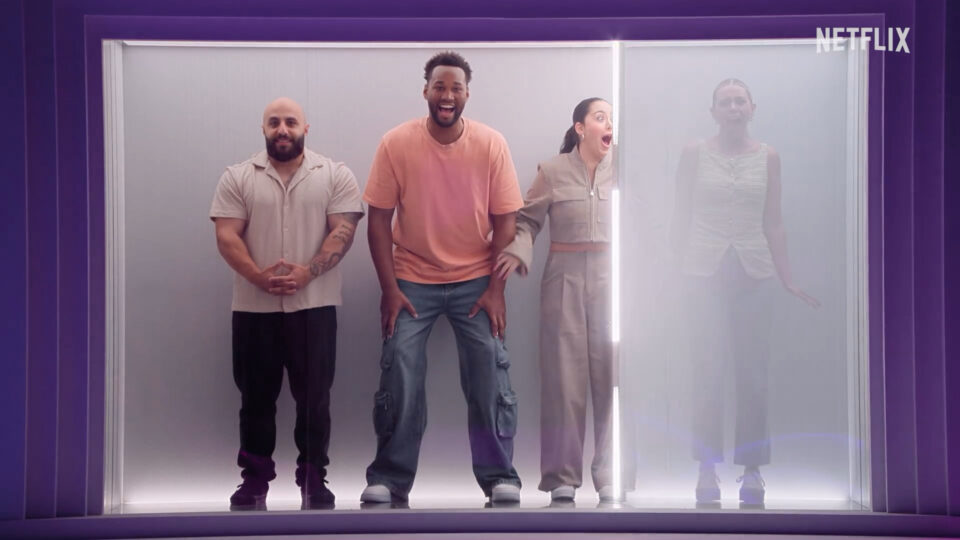
In the original film, Mike Teavee is transmitted through the air and appears inside a television set. For The Golden Ticket, this became Wonkavision 2.0 an entire environment inspired by the stark white television studio from the original movie designed by genius production design Chris Batson, PEOPLE recently revealed that the space also hosts some of the series’ wonderfully Wonka-esque challenges.
But we wanted to take the central idea of Wonkavision much further.
We developed an illusion system that allowed real people to be transported into the television world, disappearing and reappearing apparently inside the screens.
And crucially, this wasn’t achieved with a camera cut, visual effects or a clever edit.
It happened for real, in real time.
Contestants could watch another person standing in front of them apparently fade away and disappear, As I explained to PEOPLE, there was no post-production trickery involved, the illusion had to work both for the television cameras and for the people physically standing inside the set watching it happen.
That distinction was enormously important to me.
Magic That Had to Fool the People in the Room
All of the effects were designed to happen live, physically and directly in front of the contestants.
When a guest disappeared, their fellow contestants genuinely didn’t know where they had gone.
There was no opportunity for us to quietly reset the room, reposition someone during an edit or rely on the audience only seeing what the camera showed them. We were surrounded by contestants who could look wherever they wanted, react unpredictably and scrutinise the environment from multiple angles.
They had no idea what was coming.
Creating illusions under those conditions was incredibly challenging. Every effect had to work simultaneously as magic, television, theatre, engineering and storytelling.
It required months of development, prototyping and problem solving, followed by an extraordinary level of precision on set.
And that was exactly what made it so exciting.
A Factory Where the Impossible Feels Normal
Wonkavision is only one part of the magic woven throughout the series.
We created a huge range of surprising visual effects and illusions intended to make the Chocolate Factory feel as though impossible things could happen at any moment.
Some are enormous.
Some happen almost unnoticed.
And some are simply beautifully strange.
One of my favourites appears in an interview room which is filled with real floating top hats.
Not digital hats.
Not hats added later.
Actual physical top hats impossibly suspended throughout the space.
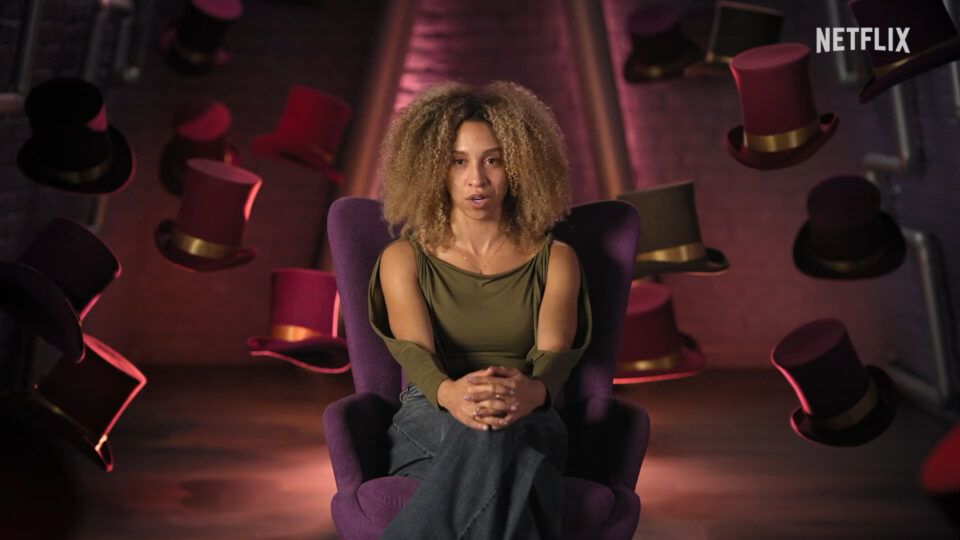
Throughout the production we were constantly looking for opportunities like this moments where magic could be part of the architecture of Wonka’s world rather than simply presented as a “magic trick”.
The goal was to create the feeling that the factory itself is magical.
Building Wonka’s Impossible World
None of this kind of work happens alone.
Behind every few seconds of impossible television can be weeks or months of engineering, fabrication, rehearsal, testing, rebuilding and extraordinarily detailed collaboration.
I was incredibly fortunate to have a brilliant core team of magicians, technicians and makers working alongside me:
Ash Hodgkinson (AKA Ash Magic), Alex Stuart and Lucas Guillemin.
Their ingenuity, commitment and willingness to solve seemingly impossible problems were fundamental to what we achieved.
There were plenty of moments during development where an idea sounded completely unreasonable on paper which generally meant it was exactly the sort of idea worth pursuing.
The process became one of asking “Could we actually do this?”, followed very quickly by “Okay… how?”
Thank You for Trusting the Magic
A project of this scale also requires producers willing to take creative risks.
A huge thank you to the teams at Eureka Productions and Netflix for trusting my vision and, equally importantly, trusting our capacity to actually deliver it.
Eureka produced the series in Australia, with Netflix describing the production as an example of the technically ambitious and imaginative work being created here.
From the beginning, there was a genuine desire to make the magic tangible not simply something that would be manufactured later in post-production.
That commitment gave us the opportunity to create real moments of astonishment for the contestants.
Their reactions are real because, in many cases, they genuinely had no idea how what they had just witnessed was possible.
Welcome to the Factory
It has been an extraordinary project to be part of and one I’m enormously proud to finally share.
There are still plenty of secrets I obviously can’t reveal and some of my favourite magical moments are yet to be discovered by audiences.
So for now, the doors to the Chocolate Factory are about to open.
Wonka’s The Golden Ticket premieres worldwide on Netflix on September 23.
I can’t wait for everyone to see what we built.